How Do You Prepare a Ford Truck or SUV for Winter?
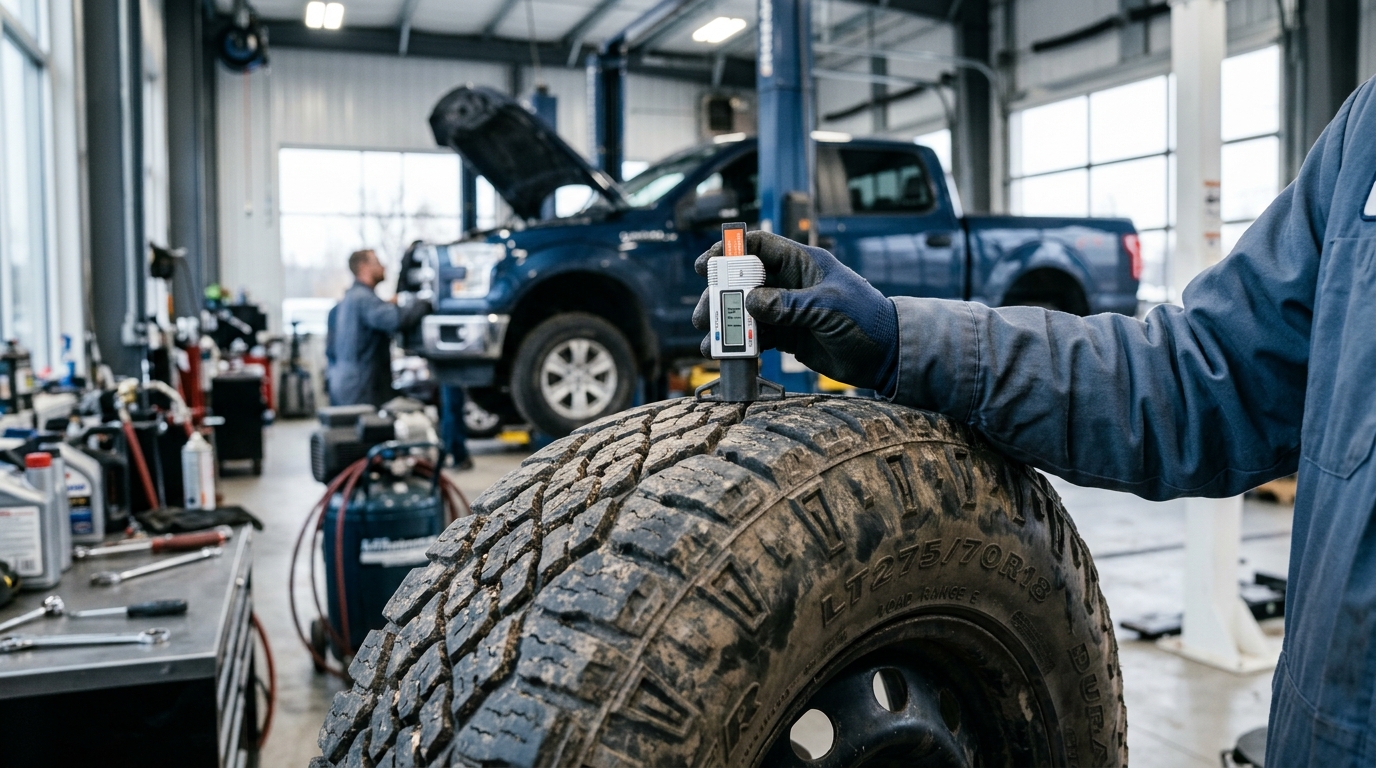
Preparing a Ford vehicle for winter requires verifying battery health, testing engine coolant to a 50/50 mixture ratio, checking tire inflation against cold-weather pressure drops, inspecting brake systems, replacing worn wiper blades, and applying underbody protection against road salt. Completing these service steps before sub-freezing temperatures arrive prevents unexpected component failures and keeps high-demand heating and defrosting systems operating reliably.
A thorough autumn inspection builds a foundation for dependable cold-weather driving. As temperatures shift in late fall, vehicle systems experience increased mechanical strain. Engine oil thickens, battery chemical reactions slow down, and rubber components stiffen. Addressing maintenance items early ensures your truck or SUV starts reliably on frosty mornings and handles slick pavement with confidence.
Key steps for complete winter readiness include:
- Testing battery cold-cranking performance and terminal connections
- Checking engine coolant freeze protection with a refractometer
- Inspecting tire tread depth and setting inflation pressures when tires are cold
- Replacing windshield wipers with winter-rated blades and filling washer reservoirs with low-freeze fluid
- Examining brake pads, rotors, and fluid for proper operation
- Treating frame rails and underbody metal with protective anti-corrosion barriers
When driving across rolling hills and around lakeside terrain near Smithville, having proper tire tread and responsive brakes is essential for navigating icy patches and wet leaves. Setting cold tire inflation pressure according to the driver-door B-pillar label—rather than the maximum pressure listed on the tire sidewall—helps maintain proper contact with the road. Checking tire pressure monthly is critical because tires lose approximately 1 psi for every 10°F drop in outside temperature.
Our technicians perform multi-point winter inspections to ensure every system meets factory safety standards. If you prefer to review maintenance options or check on replacement components, you can give our service team (816) 532-0800 to discuss your vehicle's needs. For drivers seeking well-maintained vehicles with verified service histories, exploring our pre-owned vehicle service specials provides additional peace of mind. You can also visit our service center location on US Highway 169 for professional pre-season maintenance.
Table of Contents
- How Does Freezing Weather Affect the Battery Life of a Ford F-150?
- How Often Should Antifreeze and Coolant Fluid Levels Be Tested?
- How Should Ford Owners Protect Their Undercarriage From Road Salt in Smithville?
- What Is the Difference Between Deep Snow/Sand Mode and Slippery Mode on Ford Trucks?
- What Cold-Weather Features and Ford App Controls Assist With Winter Driving?
- Common Questions About Ford Winterization and Pre-Season Maintenance
- Schedule Your Pre-Winter Inspection at Smithville Ford, LLC
How Does Freezing Weather Affect the Battery Life of a Ford F-150?
Freezing temperatures reduce Ford F-150 battery output capacity by 30% to 50% because sub-zero weather slows the internal chemical reactions required to generate electrical current. At the same time, cold weather thickens engine oil, creating up to double the starter motor resistance when turning over the engine.
This combination of reduced battery capacity and increased engine resistance places severe strain on the electrical system. During summer months, a weak battery may still deliver enough amperage to start a 3.5L EcoBoost® or 5.0L V8 engine without obvious warning signs. However, when the first severe cold snap arrives, an aging battery often fails completely. Accessories such as heated seats, rear window defrosters, and cabin heater fans further increase the electrical load immediately after starting.
To prevent sudden starting failure, our service team performs conductance testing to measure remaining cold-cranking amps against original factory specifications. Batteries older than three to four years warrant close monitoring, as internal plate degradation accelerates under winter loads. Clean cable connections and tight terminal clamps are equally vital to prevent voltage drops across the starter circuit.
When replacing an aging battery, installing a motorcraft AGM battery ensures proper power delivery and long-term durability. To protect your investment in maintenance and components, ask our team how select service repairs qualify for Repaired for Life coverage on eligible parts. Vehicle owners who prefer carrying out routine maintenance can easily order components through our portal to buy genuine Ford parts online.
How Often Should Antifreeze and Coolant Fluid Levels Be Tested?
Engine coolant and antifreeze fluid levels should be tested at least once every autumn before freezing weather arrives. A professional refractometer or hydrometer must be used to verify that the cooling system maintains a precise 50/50 mixture of antifreeze and distilled water, which provides freeze protection down to -34°F.
Relying solely on a visual check of the coolant reservoir level is insufficient. Over time, anti-corrosion additives deplete and water content can evaporate, altering the chemical balance. If the antifreeze ratio drops too low, water in the cooling system can freeze inside the engine block, radiator, or heater core, leading to cracked castings and severe engine damage. Conversely, an excessively high concentration of antifreeze reduces heat transfer efficiency and can cause localized overheating.
During long commutes across open farmland roads around Trimble, a properly balanced cooling system maintains stable engine operating temperatures and supplies consistent heat to the passenger cabin. Beyond freeze protection, fresh coolant lubricates the water pump seal and prevents internal rust and scale deposits from clogging narrow heater core passages.
Testing procedures include:
- Checking fluid freeze-point protection with a calibrated refractometer
- Inspecting coolant color and clarity for signs of rust or oil contamination
- Testing system pressure to verify radiator cap and hose integrity
- Checking upper and lower radiator hoses for soft spots or hardening
If the coolant appears discolored or testing reveals degraded chemical protection, performing a complete system flush and refill with factory-specified fluid restores thermal protection for the cold months ahead.
How Should Ford Owners Protect Their Undercarriage From Road Salt in Smithville?
Ford truck and SUV owners should protect their vehicle undercarriage by applying an oil-based protective coating or lanolin spray to exposed frame rails before winter and washing the underbody bi-weekly during frozen months. This protective barrier prevents road salt and liquid magnesium chloride from contacting bare metal and initiating oxidation.
Highway crews rely heavily on liquid chemical de-icers to clear snow and ice quickly. While these compounds improve road safety, they cling to frame rails, suspension control arms, brake lines, and trailer hitch receivers. Over time, trapped chemical residues accelerate surface corrosion on steel components and cause electrical connectors to corrode.
Effective underbody protection involves both preventative treatments and regular cleaning habits:
- Applying oil-based or lanolin underbody coatings to frame channels, crossmembers, and suspension mounts prior to the first snowfall
- Avoiding rubberized hard rubber undercoatings on aged vehicles, as moisture can become trapped underneath cracked barriers
- Rinsing the vehicle undercarriage every two weeks at a car wash equipped with underbody spray jets
- Flushing out boxed frame rails and wheel wells where wet slush accumulates
- Drying door jambs and rubber weatherstripping after washing to prevent doors from freezing shut
Taking time to treat vulnerable metal surfaces in late autumn preserves structural integrity, protects brake line durability, and keeps underbody fasteners serviceable for future maintenance.
What Is the Difference Between Deep Snow/Sand Mode and Slippery Mode on Ford Trucks?
Slippery mode reduces throttle sensitivity and optimizes traction control to prevent wheel spin on ice or hard-packed snow, whereas Deep Snow/Sand mode allows controlled wheel spin and delays transmission shifts to build and maintain momentum through unplowed, loose snow.
Understanding how these drive modes modify vehicle behavior helps drivers select the correct setting for changing road conditions:
| Feature / System | Slippery Mode | Deep Snow/Sand Mode |
|---|---|---|
| Primary Surface Target | Hard-packed snow, ice, standing water | Deep unplowed snow, loose slush, deep sand |
| Throttle Response | Reduced / Damped for smooth acceleration | Direct / Responsive to maintain engine RPM |
| Traction Control | Aggressive intervention to stop wheel spin | Relaxed intervention to allow wheel spin |
| Transmission Mapping | Early upshifts to keep torque low | Delayed upshifts to maintain momentum |
| ABS & Stability Tuning | Maximizes directional control on slick ice | Allows tires to push through loose material |
On a truck equipped with an electronic shift-on-the-fly four-wheel-drive system, engaging Slippery mode adjusts engine torque delivery to eliminate sudden tire breakaway when accelerating from a stop on icy pavement. The anti-lock braking system also adjusts sensitivity to help maintain steering control during deceleration.
In contrast, driving through deep, unplowed snow drifts requires continuous tire rotation to clear tread grooves and propel the vehicle forward. If Slippery mode were used in deep snow, the traction control system would cut engine power as soon as the tires spun, causing the truck to lose momentum and become stuck. Switching to Deep Snow/Sand mode lets the engine maintain higher RPMs and allows necessary wheel rotation to plow through loose snow pack safely.
What Cold-Weather Features and Ford App Controls Assist With Winter Driving?
Modern Ford vehicles combine hardware engineering with digital connectivity—including Ford App remote start, heated windshield wiper park zones, heated seats, heated steering wheels, and engine block heaters—to defrost glass, pre-condition engine oil, and elevate cabin comfort before driving.
Using the Ford App smartphone application, drivers can start their engine remotely, activate pre-set climate control temperatures, turn on heated seats, and engage rear window defrosters from inside their home. Pre-warming the cabin not only enhances comfort but also allows the windshield to clear frozen frost and ice before you step outside.
Key cold-weather technologies include:
- Engine block heaters that warm internal oil and engine coolant for effortless starting in sub-zero weather
- Heated wiper park zones embedded in the lower windshield glass to melt frozen ice dams and prevent wiper blades from tearing
- Heated side mirrors that clear frost and condensation for unobstructed rearward visibility
- Intelligent drive features on family SUVs like the Ford Explorer, which features a 2.3L engine producing responsive power paired with a SelectShift transmission and All-wheel drive for confident traction
Utilizing an engine block heater during extreme cold snaps reduces starter motor wear and allows the heating system to deliver warm cabin air much faster after starting. Combining these built-in hardware features with pre-season maintenance ensures your truck or SUV remains dependable throughout the entire winter season.
Common Questions About Ford Winterization and Pre-Season Maintenance
Q: Does pre-season winter maintenance help reduce emergency towing expenses?
Completing pre-season winter maintenance significantly reduces the likelihood of unexpected roadside breakdowns during severe cold weather. Inspecting battery health, replacing aged serpentine belts, checking hose connections, and testing coolant freeze points catches wear items before sub-zero temperatures cause component failure. Preventing starting failures and cooling system ruptures saves owners from costly emergency towing services and severe weather delays.
Q: How do detailed winter maintenance records impact dealership trade-in values?
Comprehensive vehicle service records demonstrate consistent ownership care, proving that critical engine, transmission, and cooling systems were protected against cold-weather stress and road salt corrosion. Vehicles with verified maintenance histories require less reconditioning time, allowing dealerships to offer higher trade-in values compared to vehicles with incomplete service documentation.
Q: How does remote start via Ford App assist with vehicle pre-conditioning?
The Ford App application allows owners to start their vehicle's engine remotely, which initiates pre-set cabin heating, activates heated seats, and engages window defrosters. Pre-conditioning the vehicle thaws frozen windshield glass, softens hardened wiper blades, and warms engine fluids to operating temperature before driving, reducing mechanical strain on cold startup.
Q: Should tire pressure be adjusted when seasonal temperatures drop?
Tire pressure drops approximately 1 psi for every 10°F decrease in ambient temperature. Because underinflated tires reduce fuel economy, impair handling responsiveness, and accelerate shoulder tread wear, tire pressures should be checked monthly using an accurate gauge when tires are cold. Inflate tires to the cold recommended pressure listed on the vehicle's driver-door B-pillar label.
Q: Is an engine block heater necessary for Ford trucks in winter?
An engine block heater warms internal engine oil and coolant, making engine turnover significantly easier during severe freeze events. While modern engines start in cold conditions without one, using a block heater reduces starter motor draw, lowers engine wear during initial oil circulation, and delivers warm cabin heat much faster after startup.
Schedule Your Pre-Winter Inspection at Smithville Ford, LLC
Preparing your truck or SUV for winter ensures reliable starting, safe handling on slick roads, and long-term component durability. From battery load testing and coolant density checks to underbody salt protection and tire evaluations, pre-season service protects your vehicle against harsh winter conditions.
Our factory-trained technicians use specialized diagnostic tools and genuine OEM parts to complete every maintenance task precisely. To prepare your vehicle for the cold months ahead, take a moment for scheduling a service appointment online at your convenience. You can also visit our team at our dealership address at 1098 US Highway 169 or give our service department a quick call at (816) 532-0800 to speak with an advisor today.
© 2026 Smithville Ford, LLC. All rights reserved.