Which Neglected Services Lead to Expensive Ford Repairs?
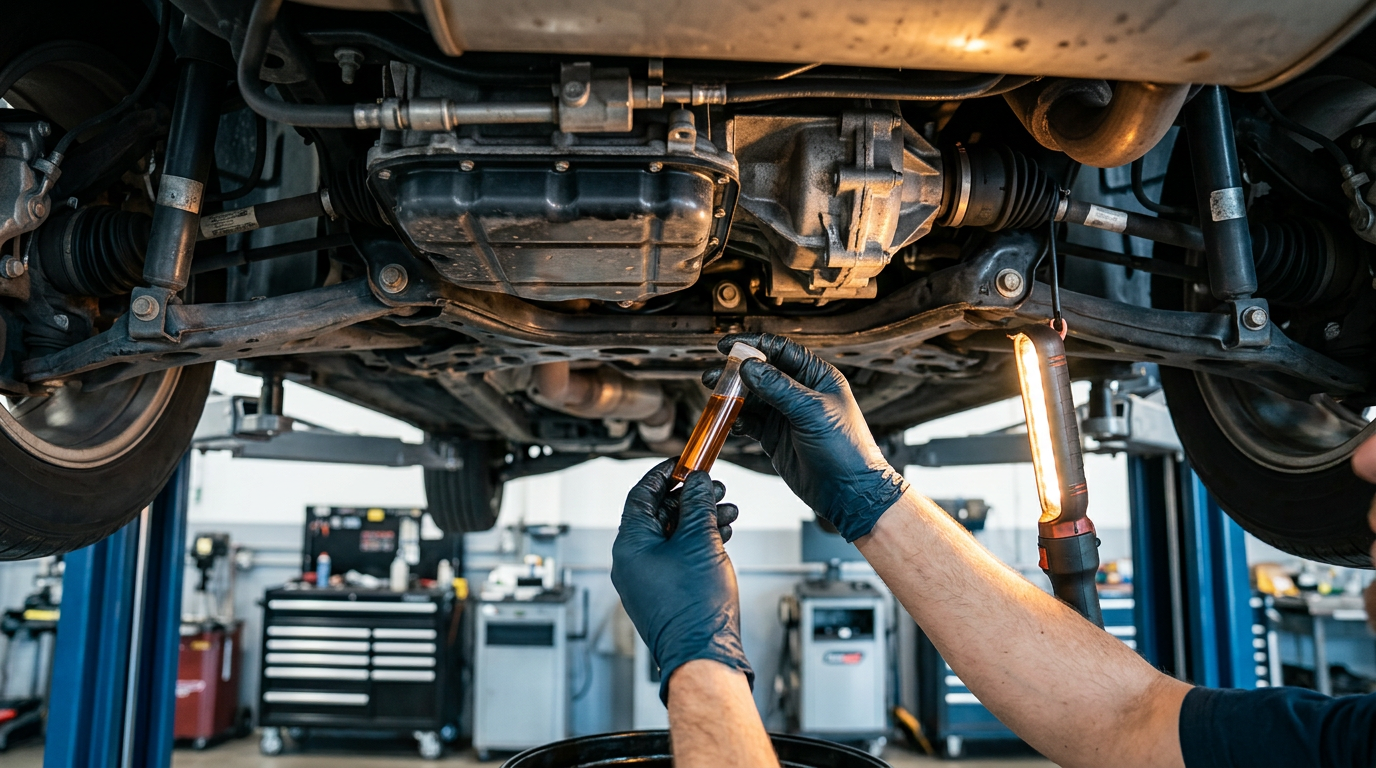 The most neglected maintenance services on Ford vehicles are drivetrain fluid replacements—specifically automatic transmission fluid, transfer case fluid, and rear differential gear oil—along with periodic brake fluid flushes and cooling system drains. While drivers rarely miss engine oil changes, skipping these critical driveline and hydraulic fluid flushes leads to thermal breakdown, internal gear friction, valve body wear, and premature mechanical failures that cost thousands of dollars to repair.
Engine oil changes get the most attention from vehicle owners, but a modern powertrain relies on multiple hydraulic and gear systems to transfer power safely and smoothly. Drivetrain assemblies operate under intense thermal stress and tight mechanical tolerances. When fluid changes are postponed, microscopic metal shavings, moisture, and degraded additives circulate through sensitive components. Over time, contaminated fluid causes slipping bands, clutch pack wear, gear pitting, and rusted brake calipers.
Postponing routine scheduled maintenance also creates hidden risks for high-mileage vehicles. During regular service appointments, technicians perform comprehensive checks beyond draining the oil pan. Skipping these scheduled service visits leaves worn serpentine belts, leaking shock absorbers, degraded coolant hoses, and uneven tire wear undetected until a total breakdown occurs on the highway.
To keep your vehicle running smoothly without unexpected mechanical failures, sourcing genuine Motorcraft replacement parts and sticking to factory fluid service schedules is essential. If you ever have questions about your vehicle's specific maintenance history or fluid condition, give our service department a quick call or stop by our Smithville service center for a complete multi-point inspection.
Table of Contents
- What Drivetrain and Transmission Fluid Service Intervals Protect Your Ford?
- What Coolant Spec Is Required for Modern Ford Engine Cooling Systems?
- How Often Should Ford Brake Pads, Rotors, and Hydraulic Fluid Be Serviced?
- How Often Does a Ford Vehicle Require an Oil Change and Routine Inspections?
- Frequently Asked Questions About Ford Maintenance
- What Essential Service Schedule Ensures Long-Term Ford Reliability?
What Drivetrain and Transmission Fluid Service Intervals Protect Your Ford?
Ford automatic transmission fluid should generally be changed every 60,000 to 100,000 miles under normal driving, while 4WD transfer case fluid and rear differential gear oil require replacement every 60,000 miles or sooner under severe operating conditions. Severe service triggers include frequent trailer towing, hauling heavy loads, off-road driving, long periods of idling, and daily stop-and-go commuting.
Automatic transmissions use complex hydraulic valve bodies, solenoids, and friction plates that generate substantial heat. Over thousands of operating miles, transmission fluid loses its heat-dissipation qualities and viscosity. Degraded fluid allows friction material to strip away from clutch plates, leading to delayed gear engagement, harsh shifting, and transmission overheating. Routine fluid flushes remove varnish, metal debris, and oxidized fluid, preserving smooth gear changes and protecting internal seals.
Four-wheel-drive and all-wheel-drive vehicles add additional transfer cases and differentials that require dedicated maintenance. The transfer case splits engine torque between the front and rear axles, while differentials allow left and right wheels to rotate at different speeds during turns. Both assemblies rely on specialized gear oils to cushion meshing ring-and-pinion gears. If differential or transfer case fluid service is skipped, thermal degradation causes extreme gear friction, bearing pitting, and eventual gear set failure.
Our service advisors notice that SUV and truck owners routinely check engine oil levels, but transmission, transfer case, and differential fluids are rarely discussed until hard shifting or rear-axle gear whine develops. For drivers planning for future vehicle upgrades, taking time to reserve your next Ford vehicle with an active scheduled maintenance routine ensures optimal trade-in value down the road.
What Coolant Spec Is Required for Modern Ford Engine Cooling Systems?
Modern Ford engine cooling systems require Motorcraft Yellow Antifreeze/Coolant meeting factory specification WSS-M97B57-A1 (concentrate) or WSS-M97B57-A2 (prediluted 50/50). This Phosphated Organic Acid Technology (P-OAT) formula provides immediate corrosion protection for internal aluminum engine blocks, cylinder heads, heater cores, and radiators.
Using the exact specified coolant is vital because modern Ford EcoBoost gas engines and Power Stroke diesel engines feature complex aluminum casting alloys and narrow coolant passages. Older green or silicate-based coolants create chemical reactions that form gunk, scale, and abrasive deposits inside aluminum passages. Mixing incompatible coolants leads to gel formation, water pump seal erosion, heater core clogging, and severe cylinder head cracking caused by localized overheating spots.
Ford specifies an initial cooling system drain and flush interval of 10 years or 200,000 miles for factory-filled Motorcraft Yellow coolant under normal use, followed by subsequent service every 5 years or 100,000 miles. For heavy-duty diesel engines or severe towing applications, Ford recommends inspecting coolant condition every 15,000 miles or 600 engine hours. Motorcraft Yellow coolant is fully backward-compatible with older factory-filled Motorcraft Orange formulas, making it the approved universal refill fluid for all modern Ford passenger cars, crossover SUVs, and heavy-duty trucks.
Proper coolant maintenance involves maintaining a precise 50/50 mixture ratio of coolant concentrate and distilled water. Using plain tap water introduces minerals like calcium and magnesium, which precipitate out under engine heat and coat the inside of cooling tubes. A maintained cooling system ensures stable engine operating temperatures, freeze protection down to -34 °F, and anti-boil protection up to 265 °F.
How Often Should Ford Brake Pads, Rotors, and Hydraulic Fluid Be Serviced?
Ford front brake pads typically require replacement every 30,000 to 70,000 miles, while brake fluid requires a complete hydraulic flush every two to three years regardless of accumulated mileage. Brake rotors should be measured for thickness and turned or replaced whenever new brake pads are installed to maintain consistent stopping distance.
Brake friction wear varies significantly based on vehicle mass, driving habits, and regional terrain. A crossover SUV like the Ford Escape Active with its 1.5L engine and All-wheel drive experiences standard brake wear during suburban commuting. However, larger three-row SUVs like the Ford Explorer ST-Line carrying six passengers or towing up to 5,000 lbs put significantly more kinetic energy through the front brake rotors. Frequent hard stops, mountain driving, and heavy trailering thin out pad friction lining rapidly and can warp brake rotors through excessive heat buildup.
Brake fluid maintenance is one of the most routinely overlooked safety services. Glycol-based brake fluid is hygroscopic, meaning it continuously absorbs moisture from atmospheric humidity through micro-pores in rubber brake hoses and reservoir caps. As water content in the fluid increases, the boiling point drops dramatically. Under hard braking conditions, heated water in the fluid turns to vapor gas, causing a spongy brake pedal feel, increased stopping distance, and internal corrosion across the brake master cylinder and anti-lock braking system valve body.
Regular brake inspections measure pad thickness in millimeters, evaluate rotor runout, and check hydraulic fluid moisture content. Replacing thin pads early prevents bare metal backing plates from grinding into brake rotors, saving owners the cost of total rotor replacement. When it is time for routine brake maintenance, you can conveniently schedule a service appointment online to have our factory-trained technicians inspect your entire braking system.
How Often Does a Ford Vehicle Require an Oil Change and Routine Inspections?
Modern Ford vehicles using synthetic blend or full synthetic motor oil require an oil and filter change every 7,500 to 10,000 miles or at least once per year, whichever occurs first. Ford equips vehicles with an Intelligent Oil-Life Monitor that calculates oil degradation based on engine revs, operating temperatures, idle duration, and towing loads.
Engine oil lubricates internal crankshaft bearings, camshafts, valve trains, and turbocharger shaft bearings. Over time, combustion byproducts, unburned fuel, and moisture contaminate motor oil, breaking down its protective viscosity film. On turbocharged engines, clean oil is critical because turbo bearings spin at speeds exceeding 100,000 RPM under extreme heat. Skipping oil changes allows sludge deposits to form, blocking tiny oil feed lines and causing costly turbocharger failure.
Tire rotations must be performed at every oil change interval, ideally every 7,500 miles. Front and rear tires wear at different rates due to steering forces, engine weight distribution, and drive torque. Rotating tires consistently redistributes tread wear across all four tires, extending tread life, preserving tire casing integrity, and protecting all-wheel-drive transfer cases from tire circumference mismatches.
Every oil service should be accompanied by a comprehensive multi-point inspection. During this evaluation, technicians inspect the following critical components:
- Engine air filter and cabin air filter condition
- 12-volt battery state-of-charge and cold-cranking capacity
- Serpentine drive belt tension and rubber cracking
- Steering linkages, ball joints, suspension struts, and CV axle boots
- Engine coolant, brake fluid, washer fluid, and power steering fluid levels
- Tire tread depth, air pressure, and uneven shoulder wear patterns
Frequently Asked Questions About Ford Maintenance
Q: What happens if I postpone my Ford's scheduled transmission fluid service?
Postponing transmission fluid service allows fluid additives to break down and suspended metal wear particles to circulate through hydraulic valve bodies. Over time, friction material degrades from clutch plates, causing harsh shifting, slipping gears, torque converter shutter, and premature transmission failure that requires a complete unit rebuild.
Q: Can I mix different colors of coolant in my Ford engine?
No, you should never mix different colors or types of engine coolant in your Ford vehicle. Combining different chemical formulas can cause chemical reactions that form thick gel, scale deposits, and sludge, which clog narrow radiator passages and cause severe engine overheating and water pump failure.
Q: How do I know if my Ford brake fluid needs to be flushed?
Brake fluid should be tested for moisture content during annual inspections or flushed every two to three years. Clear signs of degraded brake fluid include a dark brown or black fluid color in the master cylinder reservoir, a soft or spongy brake pedal, and longer stopping distances under heavy braking.
Q: Why is tire rotation required at every engine oil change interval?
Front tires wear significantly faster than rear tires due to steering motion, braking weight transfer, and front-wheel drive forces. Rotating tires every 7,500 miles ensures even tread wear across all four tires, maximizes tread life, preserves ride comfort, and prevents damage to all-wheel-drive driveline systems.
Q: Does my Ford Intelligent Oil-Life Monitor mean I can skip calendar-based oil service?
No, age degrades motor oil even if you drive low annual mileage. Ford requires changing the engine oil and filter at least once every 12 months, regardless of what percentage the Intelligent Oil-Life Monitor displays, because moisture and fuel condensation accumulate in oil pans over time.
What Essential Service Schedule Ensures Long-Term Ford Reliability?
Following Ford's factory-scheduled maintenance calendar—combining mileage-based fluid changes, annual multi-point inspections, and severe-duty adjustments—is the single most effective way to ensure long-term vehicle durability. Addressing wear items and driveline fluids before symptoms appear prevents catastrophic mechanical failures and protects your vehicle's long-term resale value.
Establishing a consistent maintenance routine simplifies ownership and keeps operating costs predictable over time. Whether you navigate daily highway commutes around Smithville or haul agricultural equipment across rural back roads near Trimble, maintaining fresh drivetrain fluids, proper engine coolant, and thick brake linings keeps your truck or SUV performing at its best through every season.
A complete Ford service checklist includes:
- Changing engine oil and filter every 7,500 to 10,000 miles or 12 months
- Rotating tires and setting proper inflation pressure every 7,500 miles
- Replacing cabin and engine air filters every 15,000 to 30,000 miles
- Flushing brake fluid every 2 to 3 years
- Changing 4WD transfer case fluid and differential gear oil every 60,000 miles
- Servicing automatic transmission fluid every 60,000 to 100,000 miles
- Draining and refilling cooling systems with Motorcraft Yellow coolant per factory specs
Our factory-certified service team is here to help you stay ahead of deferred maintenance with clear pricing and genuine OEM parts. To inspect your vehicle's current fluid condition or create a custom service schedule tailored to your driving habits, give our friendly team a quick call today or visit our local Smithville dealership to keep your Ford running strong for miles to come.
© 2026 Smithville Ford, LLC. All rights reserved.