Is It Safe to Drive a Ford With Low Brake Fluid?
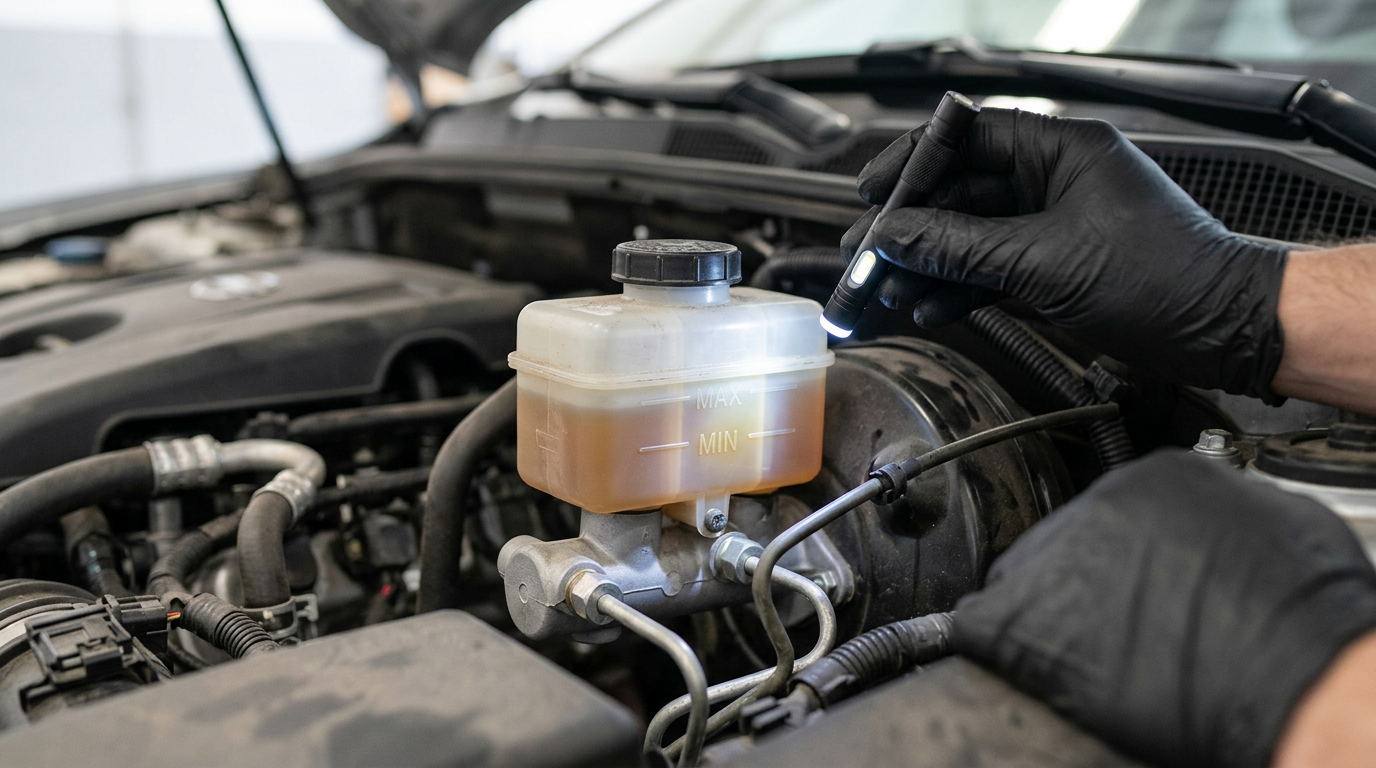 Driving a Ford vehicle with low brake fluid is unsafe and should be addressed immediately. Low fluid levels typically indicate severe brake pad wear or a breach in the hydraulic lines. Operating a vehicle under these conditions risks hydraulic pressure loss, resulting in a soft or sinking pedal, extended stopping distances, and potential total braking failure. Stop driving and arrange for inspection if the fluid level drops below the MIN line on the reservoir.
Hydraulic braking systems rely on fluid to transfer force from the foot pedal directly to the brake pads at each wheel. When fluid levels drop below the required threshold, air enters the sealed hydraulic lines. Unlike liquid fluid, air compresses easily, which prevents the hydraulic pressure from building up necessary stopping power. Driver input on the pedal translates to a squishy resistance while the vehicle takes significantly longer to come to a stop.
A sudden drop in brake fluid rarely happens without a physical cause. As brake pads wear down over thousands of miles, caliper pistons extend farther to press the pads against the rotors, naturally drawing a small amount of fluid down from the reservoir. However, a rapid drop signals a active leak in a rubber brake hose, steel brake line, wheel cylinder, or master cylinder seal. Continuing to operate the vehicle with an active leak risks draining the reservoir completely, leaving the vehicle without hydraulic stopping force.
For drivers navigating daily trips or trailering around Smithville Lake, keeping the brake system properly filled is essential for safety. Ford recommends checking the under-hood brake fluid reservoir monthly. The fluid level should always sit between the MIN and MAX markings stamped on the translucent reservoir housing. If you notice the fluid dropping toward the minimum mark, bring your vehicle in for a complete safety check. You can reach out to our service team to schedule a visit, call our desk directly at (816) 532-0800, or find directions to our dealership service department.
Table of Contents
- What Happens When Ford Brake Fluid Gets Low or Contaminated?
- What Are the Primary Warning Signs and Dashboard Lights for Low Ford Brake Fluid?
- What Brake Fluid Specifications and Boiling Points Does Ford Require?
- What Is the Average Routine Brake Maintenance Cost Over 5 Years for a Ford?
- Common Questions About Ford Brake Fluid Maintenance
- Schedule Certified Ford Brake Service
What Happens When Ford Brake Fluid Gets Low or Contaminated?
When Ford brake fluid drops too low or becomes contaminated, hydraulic efficiency breaks down, leading to pedal fade, internal rust, and mechanical failure inside sensitive brake components. Brake fluid is hygroscopic, meaning it continuously absorbs moisture out of the surrounding air right through microscopic pores in flexible brake hoses and reservoir seals. Over time, water accumulation inside the fluid creates severe operational risks under normal driving demands.
The primary danger of water-contaminated brake fluid is vapor lock. Under heavy braking—such as hauling heavy cargo or descending steep hills—the friction between brake pads and rotors generates extreme temperatures. That heat transfers directly into the caliper pistons and fluid. While pure brake fluid handles immense thermal stress, absorbed water boils at just 212°F. When moisture inside contaminated fluid boils, it turns into steam bubbles inside the brake lines. Because steam compresses under foot pressure, the driver encounters vapor lock, where pressing the brake pedal results in zero stopping force.
Moisture absorption also triggers internal corrosion throughout the brake system. Water combined with dark particulate debris—such as degrading rubber bits from hose linings and microscopic metallic dust—corrodes internal surfaces. This slurry pits the internal walls of the master cylinder, damages caliper piston bores, and clogs tiny valving passages inside the Anti-Lock Braking System (ABS) hydraulic control module. What begins as deferred fluid maintenance can quickly evolve into costly mechanical repairs, including seized calipers or failed ABS pump units.
Routine inspections prevent minor fluid degradation from turning into major mechanical failures. Fresh fluid appears clear with a light amber tint. Dark brown or black fluid indicates severe oxidation, moisture saturation, and suspended debris. During routine service intervals on trucks like the 2026 Ford F-150 equipped with a 3.5L engine and SelectShift® transmission, our technicians inspect fluid clarity and check for moisture content using calibrated optical refractometers. Replacing contaminated fluid with fresh genuine OEM brake supplies that restores system hydraulic integrity and protects expensive anti-lock braking hardware.
What Are the Primary Warning Signs and Dashboard Lights for Low Ford Brake Fluid?
Recognizing early warning signs of compromised or low brake fluid allows drivers to address issues before braking ability is compromised. The vehicle provides both physical mechanical feedback through the pedal and visual alerts on the instrument cluster.
Physical symptoms usually appear first during daily driving. Drivers should watch for these specific changes in pedal feel and stopping behavior:
- A soft, spongy pedal feel that yields under foot pressure rather than providing firm resistance.
- Increased pedal travel, requiring you to push the pedal nearly to the floorboard to achieve normal stopping power.
- A pedal that slowly sinks toward the floor while holding pressure at a stoplight, indicating an internal master cylinder seal leak.
- Noticeably extended stopping distances during routine braking maneuvers.
- Visual discoloration in the reservoir, where fluid turns dark brown or cloudy black instead of translucent amber.
On the dashboard, low fluid levels trigger the primary red brake warning light. This indicator displays an exclamation point inside a circle (!) or the literal text BRAKE. While many drivers associate this light solely with an engaged parking brake, Ford systems use the same red warning lamp to signal low brake fluid in the master cylinder reservoir or a hydraulic pressure imbalance between braking circuits. Treat any illumination of this warning light while driving as a prompt safety priority rather than simply topping off the fluid and continuing on.
It is worth noting that hardware or electrical issues can occasionally affect warning light operation. For example, Ford issued a recall update for certain 2020–2023 Ford Mustang models regarding a Body Control Module (BCM) configuration error that could prevent the low-brake-fluid warning light from turning on when fluid levels fell. This underscores why physical monthly fluid checks under the hood remain a critical habit regardless of whether a dashboard light is illuminated.
What Brake Fluid Specifications and Boiling Points Does Ford Require?
Ford specifies exact chemical standards and minimum boiling point thresholds for every vehicle in its lineup to ensure consistent hydraulic performance. Choosing the correct fluid specification depends on the vehicle model, model year, and factory engineering requirements.
Brake fluids are categorized by dry boiling point (pure new fluid) and wet boiling point (fluid containing roughly 3.7% absorbed moisture). Ford factory specifications set high thermal thresholds:
- DOT 3 Fluid (e.g., Motorcraft High Performance DOT 3): Requires a minimum dry boiling point of 401°F and a wet boiling point of 284°F. Modern Motorcraft formulas exceed basic federal standards, featuring a dry boiling point of 500°F and a wet boiling point of 284°F.
- DOT 4 LV Fluid (e.g., Motorcraft PM-20 Premium ABS): Features a dry boiling point requirement of 446°F and a wet boiling point requirement of 338°F. The Motorcraft formula delivers a 509°F dry boiling point and 338°F wet boiling point. The "LV" designation stands for Low Viscosity, which allows faster hydraulic fluid movement through microscopic valves in modern ABS and electronic stability control units, especially in cold weather.
Using the wrong fluid type can damage your braking system. While DOT 4 LV offers higher thermal resistance than DOT 3, Ford notes that DOT 4 formulas are not suitable for every single vehicle unless explicitly specified in the owner's manual. Always check the reservoir cap or owner's manual before adding fluid.
Crucially, silicon-based DOT 5 brake fluid must NEVER be used in any Ford vehicle. Standard DOT 3 and DOT 4 fluids are glycol-ether based, whereas DOT 5 is silicone-based. DOT 5 does not mix with glycol fluids; mixing them causes the fluid to gel into a sludge that clogs brake lines. Furthermore, DOT 5 causes factory rubber seals to swell and decay, and it tends to aerate inside rapid-cycling ABS pumps, causing brake system failure. For vehicles like the 2026 Ford Ranger with a 2.3L engine rated to haul a 7,500 lbs towing capacity, adhering strictly to factory fluid specs is critical when traversing demanding rural routes around Trimble. You can protect your truck by scheduling a brake fluid flush with our factory-trained technicians.
What Is the Average Routine Brake Maintenance Cost Over 5 Years for a Ford?
Over a 5-year ownership period, routine Ford brake system maintenance typically costs between $600 and $1,200 total, depending on driving habits, vehicle weight, and mileage. This maintenance budget covers essential preventive services:
- Periodic brake fluid inspections and system flushes (recommended every 2 to 3 years or 30,000 miles).
- Front and rear brake pad replacements as friction material wears down.
- Brake rotor resurfacing or full rotor replacements.
- Caliper slide pin lubrication and hardware inspections.
Investing in timely fluid flushes is one of the most cost-effective ways to avoid expensive secondary brake repairs. A professional brake fluid exchange removes accumulated water and dark abrasive grit before it can pit caliper pistons or destroy internal ABS hydraulic valves. Replacing a contaminated ABS hydraulic control module or damaged calipers can easily run over $1,000 in parts and labor alone. By spending a modest amount on routine fluid flushes, owners prevent component corrosion and maintain peak stopping performance throughout the life of the vehicle.
Common Questions About Ford Brake Fluid Maintenance
Q: How often should Ford brake fluid be flushed and replaced?
A: Ford generally recommends flushing and replacing brake fluid every 2 to 3 years or every 30,000 to 45,000 miles, whichever comes first. However, driving conditions like frequent heavy towing, mountain driving, or high-humidity climates can accelerate moisture absorption and require more frequent changes. During every multi-point inspection, technicians test the fluid's boiling point and copper content to confirm whether a flush is necessary. Maintaining proper service intervals helps keep your vehicle protected under our lifetime powertrain warranty coverage.
Q: Can I just top off my brake fluid if the level is low?
A: You can top off low brake fluid as a temporary measure to reach a repair facility, but topping off does not fix the root cause. Fluid level drops because brake pads have worn down significantly or because a hydraulic leak is present. Adding fresh fluid over old, contaminated fluid also leaves water and debris inside the system. A thorough inspection should always accompany a low fluid top-off to identify pad wear or line leaks.
Q: What color should clean Ford brake fluid be?
A: Fresh Motorcraft brake fluid is clear with a faint amber or yellowish tint. As fluid ages and absorbs heat, moisture, and rubber particulate, it turns dark yellow, brown, or eventually black. If your reservoir fluid appears dark brown or murky, it has lost its thermal resistance and anti-corrosion properties and should be flushed promptly.
Q: Is DOT 4 brake fluid backward compatible with DOT 3 in a Ford?
A: While DOT 4 LV offers higher dry and wet boiling points, Ford cautions against using generic DOT 4 fluid in systems engineered exclusively for DOT 3 unless specified by the owner's manual. DOT 4 LV (low viscosity) is required for modern Ford ABS and stability control systems from 2012 onward, but standard DOT 4 can feature different viscosity profiles. Always check the reservoir cap to ensure you use the exact Motorcraft specification designed for your model.
Q: Will contaminated brake fluid damage my ABS module?
A: Yes, contaminated brake fluid is a leading cause of ABS hydraulic control module failure. Absorbed moisture creates internal rust inside the microscopic valves and electric solenoids of the ABS unit. Suspended debris can score internal surfaces, causing solenoid valves to stick open or closed. Replacing a ruined ABS module is significantly more expensive than performing routine fluid flushes. Keeping up with routine maintenance is supported by programs like our Drive With Confidence program.
Schedule Certified Ford Brake Service
Maintaining clean, properly filled brake fluid is fundamental to your family's safety on the road. Whether your vehicle requires a routine fluid test, a complete hydraulic flush, or a full brake system inspection, our team of factory-trained technicians is here to provide transparent, expert care. We use genuine Motorcraft fluids and OEM replacement parts specifically engineered to keep your Ford performing at its best.
If you have noticed a soft pedal feel, dark fluid in your reservoir, or an illuminated red brake light, do not wait for braking performance to degrade further. Contact our service desk at (816) 532-0800 to speak with an advisor, or get directions to our Smithville dealership location to drop off your vehicle today.
© 2026 Smithville Ford, LLC. All rights reserved.