What Does Routine Ford Battery Maintenance Involve?
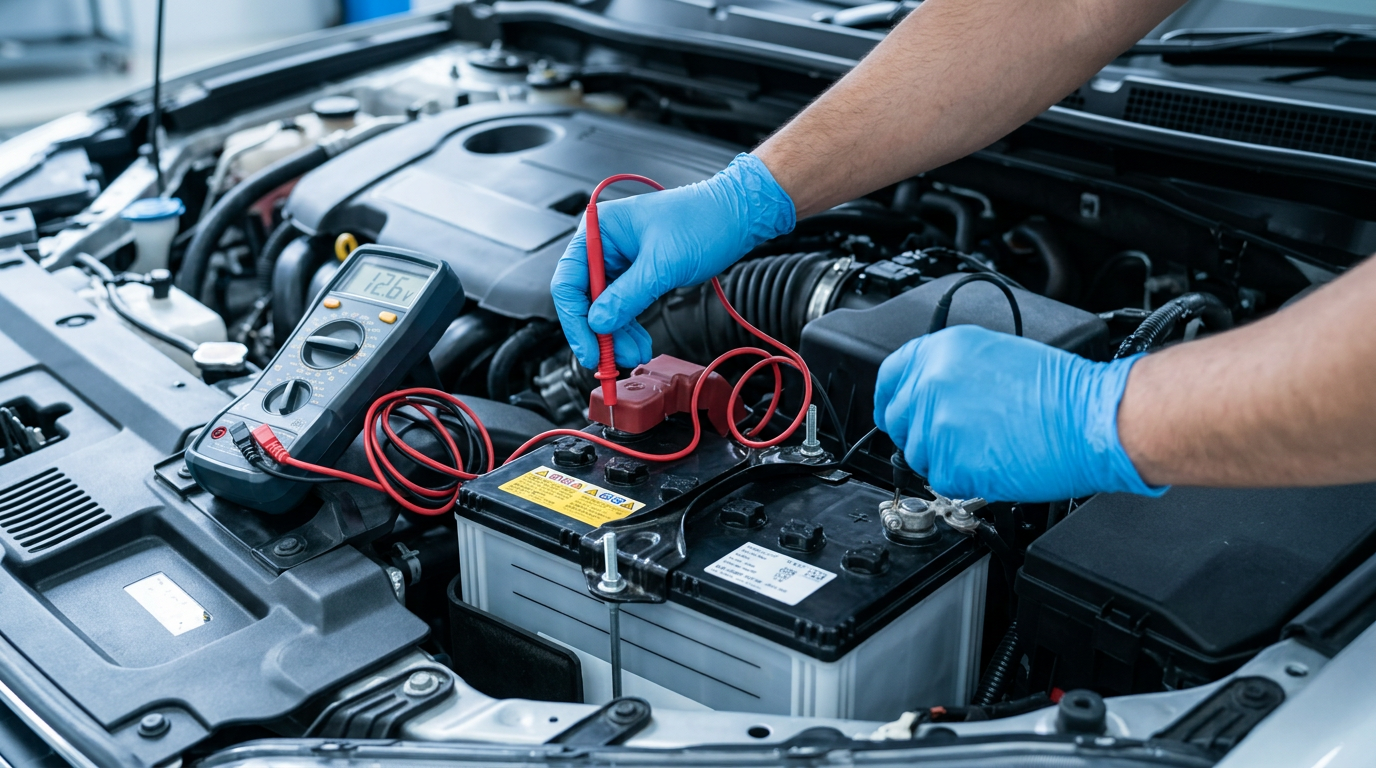 Routine Ford battery maintenance involves regular terminal cleaning to prevent corrosion, multi-point digital voltage testing, securing hold-down hardware, and inspecting state-of-charge data during routine service visits. Technicians check 12-volt battery health every 7,500 to 10,000 miles to prevent sudden starting failures, ensure alternator charge rates remain stable, and verify proper electronic system communication across the vehicle's engine control systems.
During a standard battery inspection at Smithville Ford factory-trained technicians examine the physical casing for bulging, cracks, or acid leaks. They clean built-up lead sulfate deposits from the battery terminals using specialized neutralizing solutions and anti-corrosion spray. Vibration is one of the leading causes of premature battery internal grid failure, so technicians also verify that the battery hold-down bracket is tightened to factory specifications. This structural check is especially important for local drivers who frequently tow boats or trailers around Smithville Lake, where uneven terrain and towing vibrations put extra stress on under-hood components.
Digital conductance testing measures the battery's cold-cranking amps and internal resistance against its original factory rating. This diagnostic step identifies declining battery capacity months before a driver experiences a dead battery in their driveway. When you bring your Ford vehicle in for routine care, our service advisors review your battery test results alongside your driving patterns to recommend preventative maintenance before cold weather hits. For complete care from certified technicians, drop by our local Smithville service center or give our service desk a quick call at (816) 532-0800 to discuss your battery's current status.
Table of Contents
- How Long Does a Ford 12V Motorcraft Battery Last and What Are the Warning Signs of Failure?
- AGM vs. Flooded Lead-Acid: What Is the Difference in Performance and Price for Your Ford?
- Why Is a Battery Monitoring System Reset Required and Do Aftermarket Batteries Fit?
- What Warranty Coverage Comes With a New Motorcraft Battery Purchase?
- How Does High-Voltage EV and Hybrid Battery Maintenance Differ and How Long Do They Last?
- Frequently Asked Questions About Ford Battery Service
How Long Does a Ford 12V Motorcraft Battery Last and What Are the Warning Signs of Failure?
A standard 12V Motorcraft battery typically lasts between 3 and 5 years, though driving habits, high accessory electrical loads, and severe seasonal temperature shifts directly influence its operational lifespan. Common warning signs of a dying battery include a slow engine crank during startup, dimming headlights when idling, clicking noises when turning the key, sluggish power window performance, or an illuminated battery warning light on the gauge cluster.
Automotive batteries lose capacity gradually through natural chemical degradation, plate sulfation, and active material shedding. Frequent short-distance trips prevent the alternator from fully restoring the electrical charge used during engine ignition, causing the battery to operate in a continuous state of partial charge. High-volume Ford models equipped with electronic accessories—such as the Ford Escape powered by a 1.5L engine—rely heavily on a stable 12V power supply to run infotainment displays, power seats, and active driver-assist sensors.
Recognizing early warning symptoms helps prevent unexpected roadside breakdowns. If you notice any of the following physical or electrical indicators, your 12-volt battery requires an immediate diagnostic test:
- Slow or hesitant engine cranking when turning the ignition switch or pressing the start button
- Clicking sounds coming from the starter solenoid without the engine firing
- Interior cabin lighting or headlights dimming significantly when electrical accessories like air conditioning or heated seats turn on
- Visible white, blue, or greenish powdery corrosion accumulating around the battery posts
- A swelling or bulging battery case caused by internal heat buildup or overcharging
- Intermittent electronic glitches, such as radio resets or delayed touchscreen response
When a replacement is necessary, installing an original-equipment Motorcraft battery ensures exact fitment and proper cold-cranking amp performance. You can order replacement parts directly through our online Ford parts d epartment for fast delivery or technician installation.
AGM vs. Flooded Lead-Acid: What Is the Difference in Performance and Price for Your Ford?
Absorbed Glass Mat (AGM) batteries provide higher cold-cranking amps, charge faster, and withstand deep discharge cycles better than traditional flooded lead-acid batteries, making them essential for modern Ford vehicles equipped with auto start-stop technology. Standard Motorcraft AGM batteries pricing may vary due to their heavy-duty fiberglass mat design and increased electrical longevity; contact the dealership for current pricing.
Flooded lead-acid batteries use liquid electrolyte surrounding lead plates. They are dependable for older vehicles or standard powertrains with modest electrical demands. However, modern Ford cars, trucks, and crossovers continuously run complex computers, safety modules, and electric power steering. AGM technology immobilizes the electrolyte in fine fiberglass mesh separators, making the battery spill-proof, highly resistant to vibration, and capable of cycling energy rapidly without wearing down internal plates.
| Feature / Metric | Motorcraft Flooded Lead-Acid | Motorcraft AGM (Absorbed Glass Mat) |
|---|---|---|
| Primary Application | Standard electrical demands, non-start-stop | Auto start-stop, heavy electrical loads, EVs/hybrids |
| Deep Discharge Resistance | Standard | High cycle resistance |
| Vibration Resistance | Standard | High resistance (sealed construction) |
| Recharging Speed | Standard | Up to 5 times faster charge acceptance |
| Relative Price Point | Base Motorcraft pricing | Contact the dealership for current pricing |
Installing a flooded lead-acid battery in a vehicle designed for an AGM battery leads to accelerated battery degradation and unexpected electrical system faults. The vehicle's charge management system is programmed specifically for the charge acceptance rate of the installed battery chemistry. Substituting the wrong battery chemistry shortens battery life and can disable features like automatic engine shutoff at traffic stops.
Why Is a Battery Monitoring System Reset Required and Do Aftermarket Batteries Fit?
Resetting the Battery Monitoring System (BMS) updates the vehicle computer's battery age counter so the alternator adjusts its charge rate for a fresh battery rather than overcharging it based on old battery degradation profiles. Aftermarket batteries fit standard Ford battery trays without modification as long as they match the exact BCI group size designated for that specific vehicle.
The BMS sensor continuously tracks current, voltage, and battery temperature to optimize fuel efficiency and maintain proper electrical system balance. As a battery ages, the BMS alters the alternator's charging profile to compensate for internal resistance. When a new battery is installed without resetting the BMS, the computer continues applying high-voltage charging profiles intended for an aging battery. This overcharging boils off electrolyte in flooded batteries or damages the internal plates of AGM batteries, significantly shortening the new battery's life.
Technicians perform the BMS reset using professional OBD-II diagnostic tools or by executing a specific vehicle key sequence, such as flashing the high beams and pressing the brake pedal in a designated order. While generic aftermarket batteries designed to standard BCI group sizes will physically sit inside the hold-down tray, using an aftermarket unit with incorrect cold-cranking amps or reserve capacity can trigger false warning lights. For vehicles driving along rough rural back roads near Trimble, keeping the battery securely clamped inside the factory tray with proper retaining hardware prevents physical internal grid cracking caused by constant road vibration.
What Warranty Coverage Comes With a New Motorcraft Battery Purchase?
A new Motorcraft Tested Tough MAX replacement battery includes a 36-month free replacement warranty, while the Motorcraft Tested Tough PLUS series comes with a 24-month free replacement warranty. Factory-installed original 12V batteries on new Ford vehicles are covered under the bumper-to-bumper warranty for 3 years or 36,000 miles from the warranty start date.
If a Motorcraft replacement battery fails due to a manufacturing defect within its designated free-replacement window, the battery is replaced with current pricing and coverage determined at the time of service. Original vehicle battery coverage covers battery testing, charging, and physical replacement if the battery fails during the initial 3-year factory warranty term. Labor coverage for replacement battery installation may vary depending on whether the battery was purchased over the counter or installed by certified dealership technicians.
Understanding your battery warranty details ensures you remain protected against premature battery failure:
- Motorcraft Tested Tough MAX batteries feature 36 months of 100% free replacement coverage without pro-rating.
- Motorcraft Tested Tough PLUS batteries offer 24 months of 100% free replacement coverage.
- Factory original-equipment 12V batteries are protected under the 3-year or 36,000-mile new vehicle limited warranty.
- Hybrid and EV high-voltage traction batteries carry a separate, longer factory warranty of 8 years or 100,000 miles.
- Warranty claims require proper diagnostic testing records showing cell failure or inability to hold a charge.
When you bring your vehicle to our dealership for routine maintenance, our service team checks your battery's install date to verify active warranty protection. To explore complete vehicle protection options beyond basic battery coverage, ask our service team about our lifetime limited warranty coverage options during your next visit.
How Does High-Voltage EV and Hybrid Battery Maintenance Differ and How Long Do They Last?
High-voltage lithium-ion battery packs in hybrid and electric Ford models require minimal physical maintenance because they rely on self-monitoring thermal management systems and liquid coolant loops rather than manual water refills or terminal cleaning. These high-voltage packs are engineered to last 8 to 10 years or over 100,000 miles, backed by an 8-year or 100,000-mile Ford factory warranty covering excessive capacity loss.
Electrified powertrains split electrical duties between two distinct battery systems. The high-voltage traction battery supplies power to the electric drive motors, while a auxiliary 12V battery powers cabin electronics, door locks, hazard lights, and computer relays that energize the high-voltage system. Even in an all-electric truck like the Ford F-150 Lightning—which features a 7,700 lbs maximum towing capacity—the standard 12V auxiliary battery still requires periodic voltage checks and standard maintenance just like a conventional gasoline truck.
High-voltage battery maintenance focuses primarily on cooling system integrity and proper vehicle storage practices:
- Inspecting liquid cooling loops, hoses, and radiator modules during routine multi-point inspections to prevent thermal stress
- Updating vehicle software control modules that regulate high-voltage charging speeds and cell balancing
- Following owner manual storage guidelines, as storing an EV with a completely depleted high-voltage battery for extended periods can cause non-warranted capacity degradation
- Utilizing certified EV technicians for diagnostic scans if the dashboard displays high-voltage service warnings
For diagnostic scans, high-voltage battery health checks, or routine auxiliary battery replacements on your hybrid or EV, you can easily schedule a service appointment online with our certified technical team.
Frequently Asked Questions About Ford Battery Service
Q: How do I know if my Ford needs a 12V battery replacement or an alternator repair?
A dead battery and a failing alternator share similar symptoms, but a simple diagnostic test clarifies the root cause. If your vehicle starts after receiving a jump start and continues running reliably, the battery is likely weak and unable to hold a charge. If the engine dies shortly after removing the jump cables or if dashboard lights flicker rapidly while driving, the alternator is likely failing to generate sufficient voltage to power the vehicle and recharge the battery. Our service team tests both components during an electrical system evaluation.
Q: Does short-distance driving affect battery health on Ford trucks and SUVs?
Yes, frequent short trips under 10 minutes prevent the alternator from fully restoring the high energy output used during engine startup. Over time, this causes lead-acid and AGM batteries to remain in a chronically undercharged state, accelerating plate sulfation and shortening total battery lifespan. If you primarily drive short distances, taking a longer highway drive once a week or using a trickle charger helps maintain battery health.
Q: Is high-voltage battery capacity loss covered under the Ford EV warranty?
Ford's high-voltage EV and hybrid battery warranty covers excessive capacity loss beyond normal degradation for 8 years or 100,000 miles. Lithium-ion batteries naturally lose a small percentage of total energy capacity over years of daily charging, which is normal. However, if the high-voltage pack experiences abnormal capacity reduction or internal cell failure during the warranty period, certified technicians diagnose the pack to determine warranty eligibility for repair or module replacement.
Q: What should I bring when visiting the dealership for a battery health inspection?
When bringing your vehicle in for a battery check or warranty claim, bring your vehicle registration, key fob, and any available service receipts or purchase invoices for previously installed replacement batteries. If you are claiming warranty replacement on a Motorcraft battery, the original purchase invoice or dealership installation record establishes the start date for your free-replacement coverage window.
Q: Does cold winter weather permanently damage a Ford 12-volt battery?
Cold temperatures slow down the chemical reactions inside a lead-acid or AGM battery, reducing available cranking power by up to 50 percent in freezing conditions. While cold weather does not immediately destroy a healthy, fully charged battery, freezing temperatures will permanently freeze and crack the casing of a battery that is already deeply discharged. Having your battery conductance tested in the fall ensures it has sufficient cold-cranking capacity before low temperatures set in.
Keep Your Ford Running Strong with Reliable Battery Care
Keeping up with routine battery maintenance ensures your Ford truck, SUV, or crossover starts reliably every time you turn the key. From digital voltage testing and terminal cleaning to Motorcraft warranty replacements and BMS resets, our certified service team is here to handle all your electrical system needs with complete transparency. Drop by our dealership service bay, give our advisors a call at (816) 532-0800, or ask about our service coverage options to keep your vehicle performing at its best through every season.
© 2026 Smithville Ford, LLC. All rights reserved.